Symphony Pro Musica - Pops Concert, 1998
Program Notes
Johann Strauss Sr. (1804-1849)
Radetzky March (Op. 228) (1848)
Two men were most instrumental in developing the Waltz in 19th-century
Vienna – Josef Lanner and Johann Strauss. However, it was Strauss’ first
son Johann "The Waltz King" who made it a craze, not only in Austria, but
throughout the western world. Strauss the elder was of humble, urban origins,
but showed an early musical talent and soon was making a living playing
the violin. At one time he played in Lanner’s small orchestra, but by 1825
(the year of the son’s birth) had formed his own band. This was so successful
that they traveled quite extensively and in 1838 even played at Queen Victoria’s
coronation in London! The waltz makes up only a part of the father’s many
works – the majority being marches and other kinds of dances. Apart from
his three sons (Johann, Eduard and Josef), all of whom followed in the
family "trade", The Radetzky March is probably his most enduring
legacy and is a constant favorite on musical programs, especially where
the concert is to start off "with a bang", so to speak.
Charles Gounod (1818-93)
Ballet Music from Faust (1869)
Waltz; Dance of the Nubians; Helen’s Dance and Bacchanalia
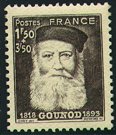 Gounod
was in his time a far more important composer than we give him credit for
today, since after Berlioz’ death in 1869, Gounod was the grand old man
of French music, and through his extensive travels was very instrumental
in spreading the French style throughout the world. Still, styles and tastes
change and only a little of Gounod’s music is regularly played today. Preeminent
among these works is his greatest stage success, the opera Faust, which
is still frequently produced. First performed in 1859, it was extensively
revised and lengthened in 1869, including the addition of the ballet music
(then required for presentation at the Paris Opera), from which we play
four of the seven numbers. The music is quite delightful and is often played
as an independent concert piece. There are seven numbers in total, of which
we present four here.
Gounod
was in his time a far more important composer than we give him credit for
today, since after Berlioz’ death in 1869, Gounod was the grand old man
of French music, and through his extensive travels was very instrumental
in spreading the French style throughout the world. Still, styles and tastes
change and only a little of Gounod’s music is regularly played today. Preeminent
among these works is his greatest stage success, the opera Faust, which
is still frequently produced. First performed in 1859, it was extensively
revised and lengthened in 1869, including the addition of the ballet music
(then required for presentation at the Paris Opera), from which we play
four of the seven numbers. The music is quite delightful and is often played
as an independent concert piece. There are seven numbers in total, of which
we present four here.
Other Links:
Excerpts from The Magic Flute (1791)
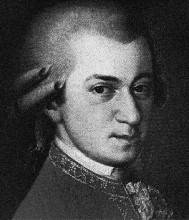 Devotees
of the movie Amadeus will be well acquainted with the story of how
Emanuel Schikaneder commissioned Mozart to write an opera for his Theater
auf der Weiden, the peoples’ opera house (something like Broadway is
to the Metropolitan opera). Mozart was enthusiastic about the project as,
at least so he thought, it would be much less constrained by the strict
censorship of the period, and he would be sharing in the profits. It is
well known of course that it is imbued with the ideas and symbolism of
Freemasonry and ended up causing many more problems (after his death) than
he would have expected because of the political situation, post American
and French revolutions. However, it was so popular that the authorities
could only cast aspersions rather than ban it outright.
Devotees
of the movie Amadeus will be well acquainted with the story of how
Emanuel Schikaneder commissioned Mozart to write an opera for his Theater
auf der Weiden, the peoples’ opera house (something like Broadway is
to the Metropolitan opera). Mozart was enthusiastic about the project as,
at least so he thought, it would be much less constrained by the strict
censorship of the period, and he would be sharing in the profits. It is
well known of course that it is imbued with the ideas and symbolism of
Freemasonry and ended up causing many more problems (after his death) than
he would have expected because of the political situation, post American
and French revolutions. However, it was so popular that the authorities
could only cast aspersions rather than ban it outright.
Nevertheless, we need not be concerned here with the background to the
opera, but only with the wonderful music which Mozart, then at the very
height of his mental powers, wrote. As usual in a Mozart opera, there is
a large amount of pure fun in the mix, particularly in the first and third
of our selections. In the first, the Queen of the Night’s bird-catcher
Papageno (the role created by Schikaneder himself) expresses his longing
for a wife, accompanying himself with the set of magic chimes (played in
the orchestra on the glockenspiel - nowadays a keyboard) given to him by
the Queen’s messengers to ward off evil. In the second, Pamina, who is
destined for Prince Tamino, laments the apparent lack of response from
Tamino (which is in fact because he is bound to silence) and wishes death
on herself. Meanwhile, Papageno unwillingly agrees to wed an ugly old woman,
who then turns into a young girl, like he, dressed in feathers – his longed
for Papagena. The third selection is their joyful duet.
Other Links:
Slavonic Dance #8, Op. 46 (1878)
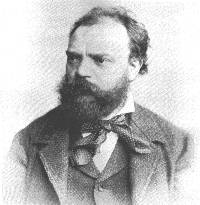 Not
long after Brahms’ very popular Hungarian dances were published, Simrock
(their common publisher) proposed to Dvorak that he should write a similar
set. However, the chief commercial interest was in piano duets – such music
was tremendously popular and sold very well – rather than for the orchestral
version which came just a little later. And it was this set of dances (another
came eight years later) which did most to make Dvorak famous throughout
Europe and the U.S.A. Nearly all of the first set are based on actual Bohemian
dances, sometimes the music is derivative and sometimes wholly original.
This, the last, makes a rousing finale and is in the form of a "furiant",
a generally fast dance in ¾ time where the first two measures of
each group of four is a hemiola (3 notes spanning two measures, i.e 3x2)
while the second half is two measures of three beats (2x3). It is in a
form similar to that of a minuet and trio, with coda (although the pattern
of repetitions is different). The "minuet" is in G minor, while the "trio"
and ending of the coda is in G major.
Not
long after Brahms’ very popular Hungarian dances were published, Simrock
(their common publisher) proposed to Dvorak that he should write a similar
set. However, the chief commercial interest was in piano duets – such music
was tremendously popular and sold very well – rather than for the orchestral
version which came just a little later. And it was this set of dances (another
came eight years later) which did most to make Dvorak famous throughout
Europe and the U.S.A. Nearly all of the first set are based on actual Bohemian
dances, sometimes the music is derivative and sometimes wholly original.
This, the last, makes a rousing finale and is in the form of a "furiant",
a generally fast dance in ¾ time where the first two measures of
each group of four is a hemiola (3 notes spanning two measures, i.e 3x2)
while the second half is two measures of three beats (2x3). It is in a
form similar to that of a minuet and trio, with coda (although the pattern
of repetitions is different). The "minuet" is in G minor, while the "trio"
and ending of the coda is in G major.
Other Links:
Star Wars –
Main Theme (1977)
 With
well over a hundred movie and TV music credits, including 5 Oscars (Fiddler
on the Roof, orchestration, Jaws, Star Wars, E.T., and Schindler’s
List, original score) as well as twenty other nominations, it would
be hard to deny that Williams is the dominant figure in the world
of movie music. Born on Long Island (like Richard Rodgers – see below),
not far from Amityville (the setting for Jaws), he attended UCLA
and the Julliard School of Music and got his start in TV at the ripe old
age of 21 (Genera Electric Theater). With ten years conducting the Boston
Pops also to his credit, he is truly a giant among modern-day musicians.
With
well over a hundred movie and TV music credits, including 5 Oscars (Fiddler
on the Roof, orchestration, Jaws, Star Wars, E.T., and Schindler’s
List, original score) as well as twenty other nominations, it would
be hard to deny that Williams is the dominant figure in the world
of movie music. Born on Long Island (like Richard Rodgers – see below),
not far from Amityville (the setting for Jaws), he attended UCLA
and the Julliard School of Music and got his start in TV at the ripe old
age of 21 (Genera Electric Theater). With ten years conducting the Boston
Pops also to his credit, he is truly a giant among modern-day musicians.
Other Links:
Main Title – Looks like a suicide; John Dunbar; Journey
to Fort Sedgewick; Pawnee attack; Love theme; Two Socks at play; Farewell.
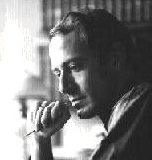 Another musical
giant, John Barry is John Williams’ counterpart from across the Pond. Born
a year later in York, England (as J.B. Prendergast) he began his musical
career as a Rock’n’Roll trumpeter, getting into writing for films in the
late 50s. Also with over a hundred movie credits (very little TV), as well
as four Oscars (Born Free, The Lion in Winter, Out of Africa and Dances
with Wolves), J.B.’s accomplishments are only slightly behind those of
J.W. This particular score has some really beautiful music and helped to
elevate the movie to, if not greatness, then at least excellence. Particularly
telling are the "Journey to Fort Sedgewick" (I can still see the rolling
prairies) and "Love Theme" with its haunting flute melody. The story starts
during the Civil war and ends some time before Custer's Last Stand.
Lt. Dunbar (Kevin Costner) is posted to Sioux (more properly called "Lakota")
territory in South Dakota to find that he is in sole charge of the fort.
He makes friends with a playful wolf (Two Socks) and falls in love with
a white woman who has been brought up by the Lakota people.
Another musical
giant, John Barry is John Williams’ counterpart from across the Pond. Born
a year later in York, England (as J.B. Prendergast) he began his musical
career as a Rock’n’Roll trumpeter, getting into writing for films in the
late 50s. Also with over a hundred movie credits (very little TV), as well
as four Oscars (Born Free, The Lion in Winter, Out of Africa and Dances
with Wolves), J.B.’s accomplishments are only slightly behind those of
J.W. This particular score has some really beautiful music and helped to
elevate the movie to, if not greatness, then at least excellence. Particularly
telling are the "Journey to Fort Sedgewick" (I can still see the rolling
prairies) and "Love Theme" with its haunting flute melody. The story starts
during the Civil war and ends some time before Custer's Last Stand.
Lt. Dunbar (Kevin Costner) is posted to Sioux (more properly called "Lakota")
territory in South Dakota to find that he is in sole charge of the fort.
He makes friends with a playful wolf (Two Socks) and falls in love with
a white woman who has been brought up by the Lakota people.
Other Links:
Richard Rodgers (1902-1979)
Richard Rodgers was born on Long Island and studied at Columbia and the
N.Y. Institute of Musical Art. For most of his career, he was teamed with
Lorenz Hart and together they created many very popular musicals during
the thirties and early forties. Hart’s life began to fall apart, however,
around late 1942 (he died in late 43) and Rodgers was forced to find another
partner. Of course, he found Oscar Hammerstein and the rest, as they say,
is history. Their first big hit was Oklahoma!, followed by Carousel,
South Pacific, The King and I, and The Sound of Music. Carousel
was based on an adaptation of Molnar’s Liliom and transplanted
from Budapest to New England. In a break from tradition, this slightly
discordant Waltz was used instead of an overture to begin the show and
it immediately sets the scene. The music is made up of the most elegant
and flowing melody, and which must be one of the most universally-known
tunes of the 20th century.
Other links:
Claude-Michel Schönberg (b. 1944)
At the end of the day; I dreamed a dream; Master of the
house; On my own; Do you hear the people sing?
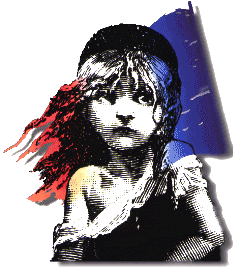 Victor
Hugo’s great masterpiece was published in 1862 and it was said that it
monopolized the attention of all of France. Certainly, it is a story for
the ages and perhaps it was inevitable that it would one day become one
of the most successful and popular musicals throughout the world. Not long
after the French version opened in 1980, plans were made to rewrite it
in English and it opened first in London and then in New York (March, 1987).
It was by far the biggest hit of the season and is of course still going
strong.
Victor
Hugo’s great masterpiece was published in 1862 and it was said that it
monopolized the attention of all of France. Certainly, it is a story for
the ages and perhaps it was inevitable that it would one day become one
of the most successful and popular musicals throughout the world. Not long
after the French version opened in 1980, plans were made to rewrite it
in English and it opened first in London and then in New York (March, 1987).
It was by far the biggest hit of the season and is of course still going
strong.
 Born
in 1944 of Hungarian parents, Claude-Michel Schönberg began
his career as singer, writer and producer of popular songs and is also
the composer of Miss Saigon. This arrangement for orchestra
(to which we have added our soloists) will sound somewhat different to
the mix of mainly strings, keyboards and percussion which you’re used to
in the theater. Still, the music and lyrics are so powerful that they speak
directly to the listener’s soul, regardless of the musical details.
Born
in 1944 of Hungarian parents, Claude-Michel Schönberg began
his career as singer, writer and producer of popular songs and is also
the composer of Miss Saigon. This arrangement for orchestra
(to which we have added our soloists) will sound somewhat different to
the mix of mainly strings, keyboards and percussion which you’re used to
in the theater. Still, the music and lyrics are so powerful that they speak
directly to the listener’s soul, regardless of the musical details.
Other Links:
Index of On-line SPM
Program Notes
© This page copyright 1998 by Robin
Hillyard and Symphony Pro
Musica.
Please send comments to Robin Hillyard